Cards
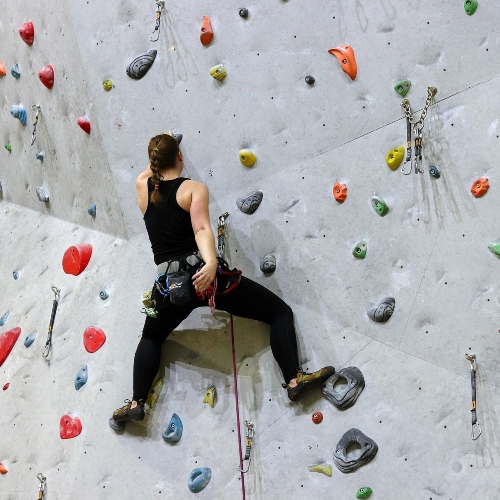
Lead Climbing
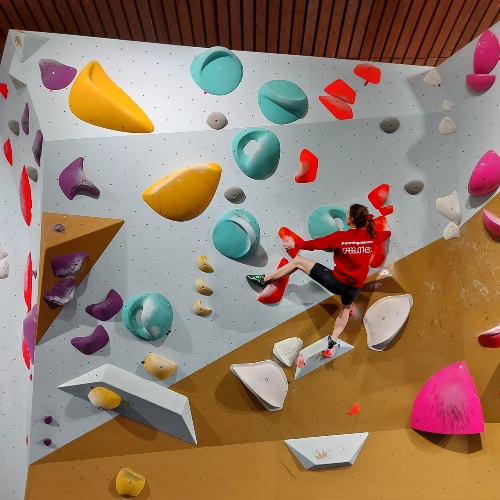
Bouldering
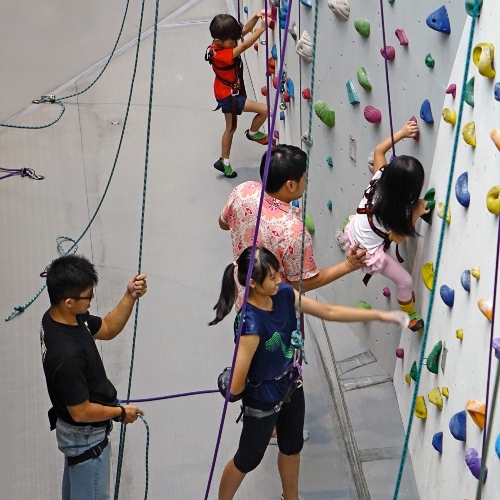
Top Rope
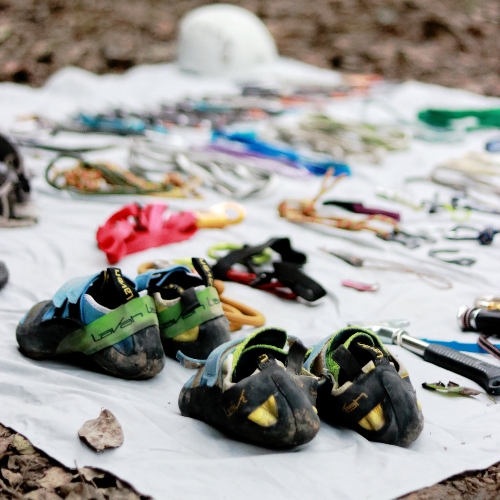
Equipment
Lead Climbing
Bouldering
Top Rope
Equipment
Climbing rope: A dynamic rope that is designed to stretch to absorb the force of a fall. The rope should be long enough to reach from the top of the climb to the ground, plus a few extra meters for tying knots and rope management. The diameter of the rope can vary depending on the climb, but a 10mm-11mm rope is commonly used.
Harness: A waist belt and leg loops that attach to the climbing rope and allow the climber to tie in and attach to the rope.
Belay device: A mechanical device used to control the rope and catch a falling climber. The belay device attaches to the climber's harness and the rope passes through it. The belayer uses the device to take in or let out slack as the climber ascends or descends.
Locking carabiner: A specialized carabiner used to attach the belay device to the climber's harness and the rope to the anchor.
Climbing shoes: Specialized shoes that are designed to be tight-fitting and have a sticky rubber sole for better grip on rock.
Chalk bag and chalk: A small bag that attaches to the climber's harness and contains powdered chalk. Chalk is used to keep the hands dry and improve grip on the rock.
Crash pads: Large, thick pads that are placed underneath the boulder to cushion a climber's fall.
Climbing rope: A dynamic rope that is designed to stretch to absorb the force of a fall. The rope should be long enough to reach from the bottom to the top of the climb, plus a few extra meters for tying knots and rope management. The diameter of the rope can vary depending on the climb, but a 9mm-10mm rope is commonly used. Harness: A waist belt and leg loops that attach to the climbing rope and allow the climber to tie in and attach to the rope.
Belay device: A mechanical device used to control the rope and catch a falling climber. The belay device attaches to the climber's harness and the rope passes through it. The belayer uses the device to take in or let out slack as the climber ascends or descends.
Quickdraws: Two carabiners connected by a short piece of webbing or wire that are used to attach the rope to pre-placed protection on the climb, such as bolts or anchors.
Protection: Devices such as bolts, cams, or nuts that are placed in the rock to protect against a fall. The lead climber carries these devices with them and places them in the rock as they climb, then clips the rope into them using quickdraws.
Remember, it's important to use the appropriate equipment for each style of climbing and to always prioritize safety when climbing.
Learn more